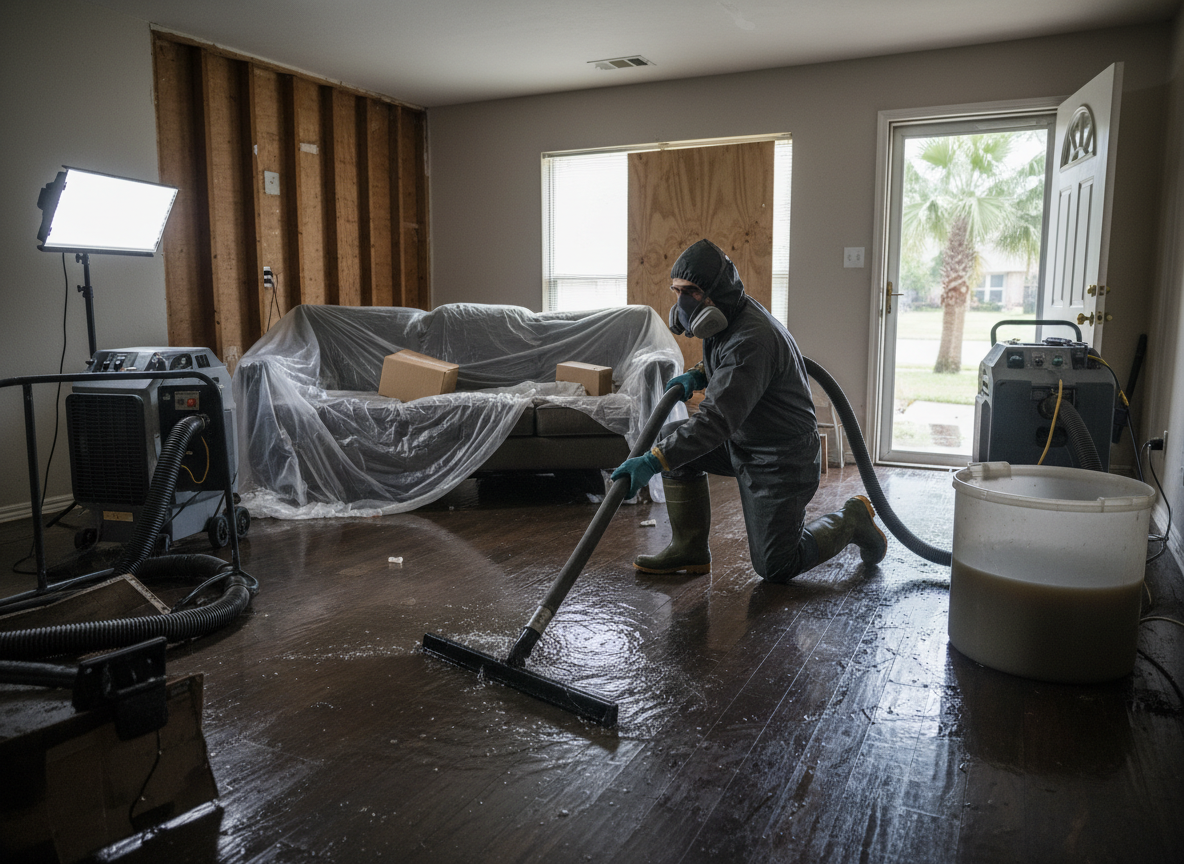
Homes in the Heights sit on narrow lots with many built before 1930, so pipe leaks under pier-and-beam foundations spread fast once water reaches the soil. Heavy summer downpours and the nearby White Oak Bayou push water toward crawl spaces and slab edges on streets like Heights Boulevard and Studewood. Quick extraction stops the humidity from turning small leaks into widespread mold inside these older bungalows.
Our crews reach properties around Harvard Elementary and Donovan Park the same day because we know the tight alleys and limited parking that slow larger trucks. After storms, we focus on drying wall cavities in the single-story wood-frame houses that line 19th Street and Yale Street before moisture travels to shared fences and neighboring lots.
Heights residents also see occasional slab leaks from shifting clay soil after winter rains. We map moisture with meters in the concrete floors common on the west side of the neighborhood and pull baseboards early so the subtropical air does not keep hidden pockets wet for weeks.
Around Heights
We regularly work near:
- 📍Heights High School
- 📍Harvard Elementary School
- 📍19th Street
- 📍White Oak Bayou
- 📍Heights Boulevard
- 📍Donovan Park
Water Damage Restoration in Heights — Local Notes
- •Pier-and-beam homes from the 1920s on narrow lots limit equipment access, so we often carry smaller dehumidifiers through side yards instead of driveways.
- •Proximity to White Oak Bayou means storm water can back up into yards along Heights Boulevard, requiring extra perimeter drying after heavy rain.
- •Original cast-iron plumbing under many bungalows near 19th Street corrodes from the inside, creating slow leaks that reach subfloors before homeowners notice.
- •Humid summers turn any standing water in crawl spaces into mold within 48 hours on streets like Yale and Studewood, so we prioritize negative air during extraction.