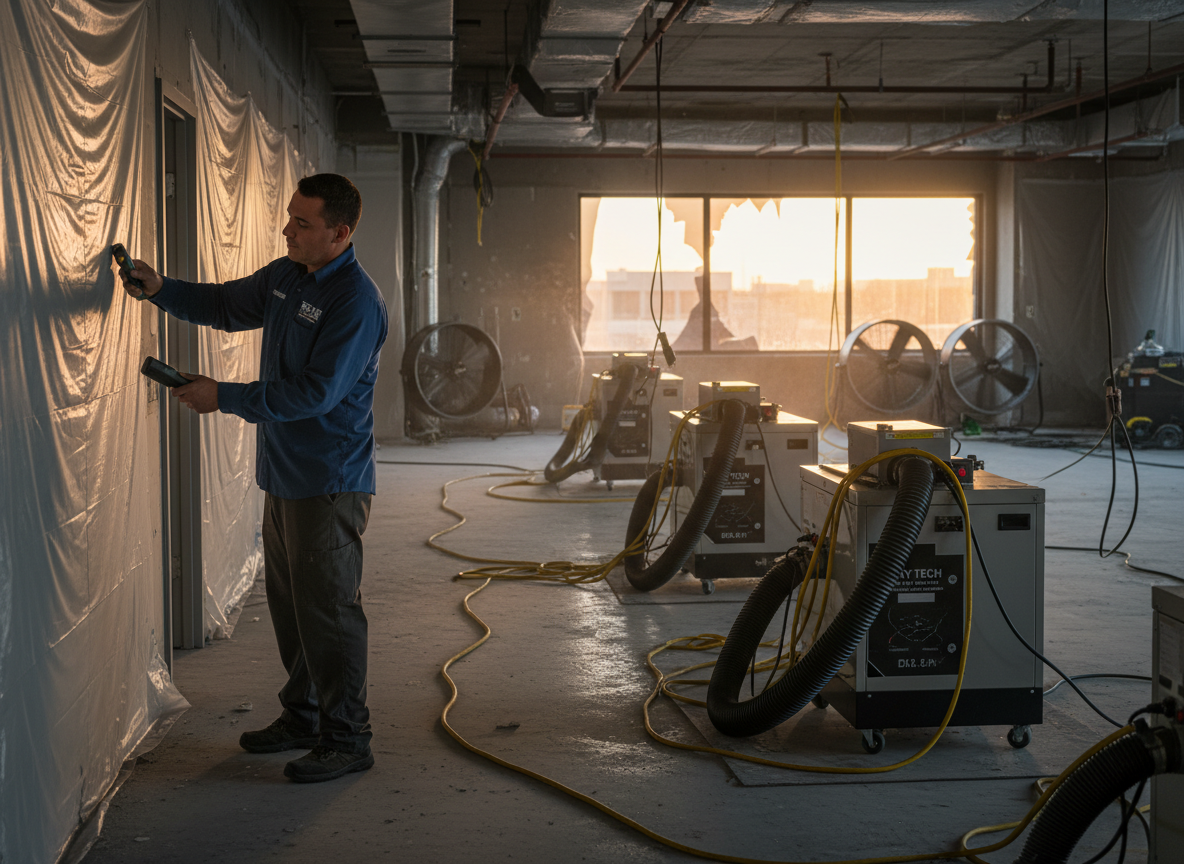
Houston's subtropical climate brings high summer humidity that slows natural evaporation, so structural drying after leaks or storms requires industrial dehumidifiers rated for 70-plus pints per day paired with high-velocity air movers. Older homes in the Heights and Montrose often feature plaster-over-lath walls and pier-and-beam foundations where moisture travels along joists and hides behind baseboards, demanding cavity drying tools rather than surface fans alone. Without proper extraction, residual moisture in Harris County homes can lead to cupping hardwood floors or delamination of subflooring within days.
Technicians map moisture with penetrating meters and infrared cameras before placing equipment, then monitor daily readings to confirm drying progress without over-drying and cracking drywall. In Midtown and Downtown high-rises or River Oaks estates with slab foundations, water can migrate under tile or into insulation, requiring targeted wall and floor drying that accounts for the mild winters allowing year-round mold growth if humidity stays elevated. Homeowners in Katy and Sugar Land frequently see jobs extend when nearby bayous keep soil moisture high around foundations.
Edge cases include post-storm jobs where power outages prevent early equipment use, allowing saturation to reach framing in Pearland properties. Proper sequencing avoids trapping moisture behind vapor barriers common in 1970s-1990s construction throughout the county.
Technician insight
In Houston the thing that catches most people out with Structural Drying & Dehumidification is how quickly moisture travels through the pier-and-beam crawlspaces common in Heights and Montrose homes when summer humidity stays above 70 percent; skipping cavity tools leaves hidden pockets that later cause baseboard mold.
River Oaks Hardwood Saturation
Heavy rain entered through a roof leak and soaked oak floors and subflooring. Meters showed elevated moisture extending into wall cavities. Directed air movers and dehumidifiers ran for four days with daily readings until levels normalized, preventing cupping across the affected rooms.
Structural Drying & Dehumidification Services We Offer
✓Moisture Mapping and Assessment
Pinpoint hidden water in walls, floors, and ceilings using meters and thermal imaging to guide equipment placement in Houston homes.
✓Air Mover and Dehumidifier Deployment
Position industrial drying equipment sized for subtropical humidity levels to pull moisture from structural materials without warping.
✓Wall Cavity and Subfloor Drying
Inject dry air into cavities and under floors common in Heights pier-and-beam houses to reach trapped moisture behind plaster and hardwood.
✓Daily Moisture Monitoring
Track drying progress with repeated readings to adjust equipment and prevent over-drying or mold regrowth in humid Montrose and Midtown properties.
✓Hardwood Floor and Baseboard Drying
Use specialized mats and directed airflow to dry oak and pine floors without cupping in older River Oaks and Heights residences.
Structural Drying & Dehumidification Cost in Houston, TX
| Service | Typical Range | What Affects It |
|---|---|---|
| Small room drying setup | $600–$1,200 | Single room or closet; price rises with multiple days needed in high humidity. |
| Whole floor drying | $1,800–$3,500 | Multiple rooms; affected by pier-and-beam access or slab migration. |
| Daily equipment rental extension | $250–$450 | Per additional day after initial setup in summer humidity. |
| Cavity and subfloor drying add-on | $400–$800 | Required for lath walls or hardwood in Heights and Montrose homes. |
Ranges are typical for Houston, TX and confirmed with an exact written quote before any work starts.
How it works
- 1
Initial Moisture Assessment
Technicians inspect affected areas in the home using meters and cameras to locate all moisture pockets before equipment arrives.
- 2
Equipment Setup
Air movers and dehumidifiers are positioned based on layout, foundation type, and current humidity to maximize extraction in Houston conditions.
- 3
Ongoing Monitoring
Daily checks adjust airflow and dehumidification rates until moisture levels stabilize across materials.
- 4
Final Verification
Final readings confirm structural components are dry before equipment removal and any needed repairs.
Pricing
Costs depend on square footage affected, equipment duration, and access challenges in older Houston homes; upfront quotes provided after assessment.