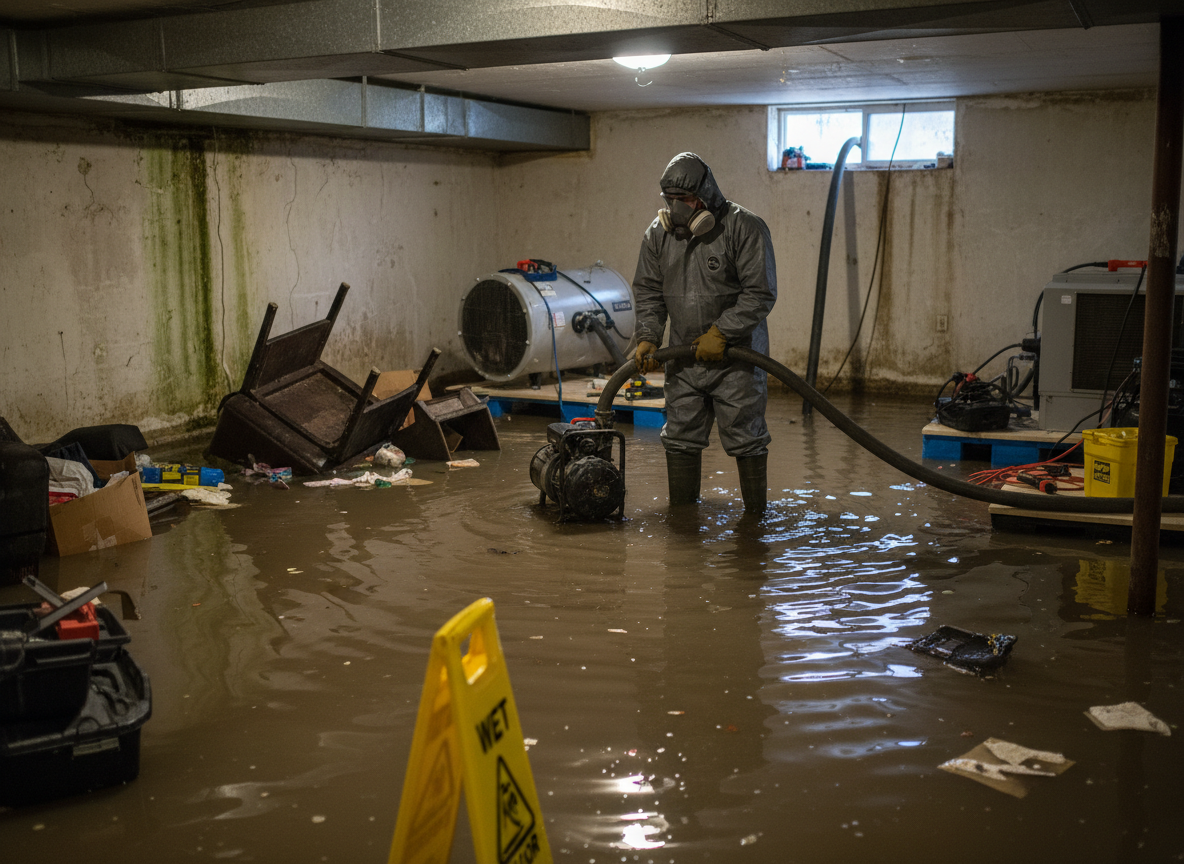
Houston’s subtropical climate brings sudden heavy rains that overwhelm drainage in older neighborhoods like the Heights and Montrose. Many homes built before 1960 sit on clay soils that hold water against foundations, sending it into basements through cracks or sump failures. When basements flood, the combination of standing water and high humidity accelerates mold on drywall, carpet, and stored items within 24 to 48 hours. Technicians must extract water quickly, then run commercial dehumidifiers and air movers for days while monitoring moisture in joists and concrete slabs that retain humidity longer than in drier climates.
Sewage backups from aging Harris County lines add another layer of risk. Contaminated water requires full PPE, antimicrobial treatment, and removal of porous materials that cannot be saved. In Midtown and Downtown high-rises with below-grade parking or storage, limited access means pumps and hoses must be staged through stairwells or freight elevators. Homeowners in River Oaks often discover hidden French drains clogged by tree roots after tropical storms, turning a simple leak into a multi-day drying job. Proper documentation of every step helps when insurance adjusters review claims for properties near the Houston Zoo or Museum of Fine Arts where flooding has occurred repeatedly.
Edge cases include finished basements with tile or hardwood over concrete. Removing flooring too soon can trap moisture underneath, leading to hidden mold that later affects air quality upstairs. Crews use moisture meters and thermal imaging to map wet zones before any demolition. In Pearland and Sugar Land homes on slab-on-grade with finished lower levels, water often migrates from the garage or utility room rather than through walls. Technicians focus on pulling baseboards and drilling weep holes to release trapped water without unnecessary destruction.
Code considerations in Houston require permits for electrical work when outlets or panels are submerged. Technicians shut off power at the main panel first, then use temporary GFCI-protected lines for equipment. After drying, they document final moisture readings below 15 percent before allowing reconstruction to begin.
Technician insight
In Houston, the thing that catches most people out with Flooded Basement Cleanup is how fast mold sets in once the subtropical humidity hits wet drywall in older Heights homes. Clay soil keeps pushing water back against foundations for days after the rain stops, so we often have to run equipment longer than homeowners expect.
Heights Home After Heavy Rain
A 1950s bungalow in the Heights took on six inches of rainwater through a failed sump. We extracted the water the same afternoon, removed saturated carpet and lower drywall, then ran drying equipment for five days until joists tested dry. The homeowner avoided a full mold remediation by acting before the next warm front arrived.
Flooded Basement Cleanup Services We Offer
✓Standing Water Extraction
Rapid removal of pooled water using truck-mounted pumps and portable extractors sized for Houston basement layouts.
✓Sewage-Contaminated Water Cleanup
Full containment, disinfection, and disposal of Category 3 water from backed-up lines common in older Harris County neighborhoods.
✓Basement Drying and Dehumidification
Placement of industrial air movers and dehumidifiers to pull moisture from concrete, framing, and insulation in humid subtropical conditions.
✓Mold Prevention After Flooding
Antimicrobial application and moisture monitoring to stop mold growth that starts quickly in Houston’s warm, damp air.
✓Finished Basement Material Removal
Selective demolition of saturated drywall, carpet, and trim while preserving salvageable items in homes across the Heights and Montrose.
Flooded Basement Cleanup Cost in Houston, TX
| Service | Typical Range | What Affects It |
|---|---|---|
| Initial Water Extraction | $400–$900 | Varies with basement size and access in older Heights or Montrose homes. |
| Full Drying Package | $800–$2,200 | Includes equipment rental for 3–7 days depending on concrete moisture retention. |
| Sewage Cleanup Add-On | $600–$1,500 | Required when Category 3 water is present from municipal lines. |
| Material Removal And Haul Away | $300–$700 | Covers drywall, carpet, and trim disposal. |
Ranges are typical for Houston, TX and confirmed with an exact written quote before any work starts.
How it works
- 1
Arrival And Safety Assessment
Technicians arrive, locate the water source, shut off power if needed, and set up containment to protect unaffected areas of the home.
- 2
Water Removal
Pumps and extractors pull standing water, followed by removal of heavily saturated materials that cannot be dried in place.
- 3
Drying And Monitoring
Equipment runs continuously with daily moisture checks until readings reach safe levels for reconstruction.
- 4
Final Documentation
Photos, moisture logs, and a written report are provided for insurance or homeowner records.
Pricing
Cost depends on water volume, contamination level, and how long drying takes in Houston humidity.