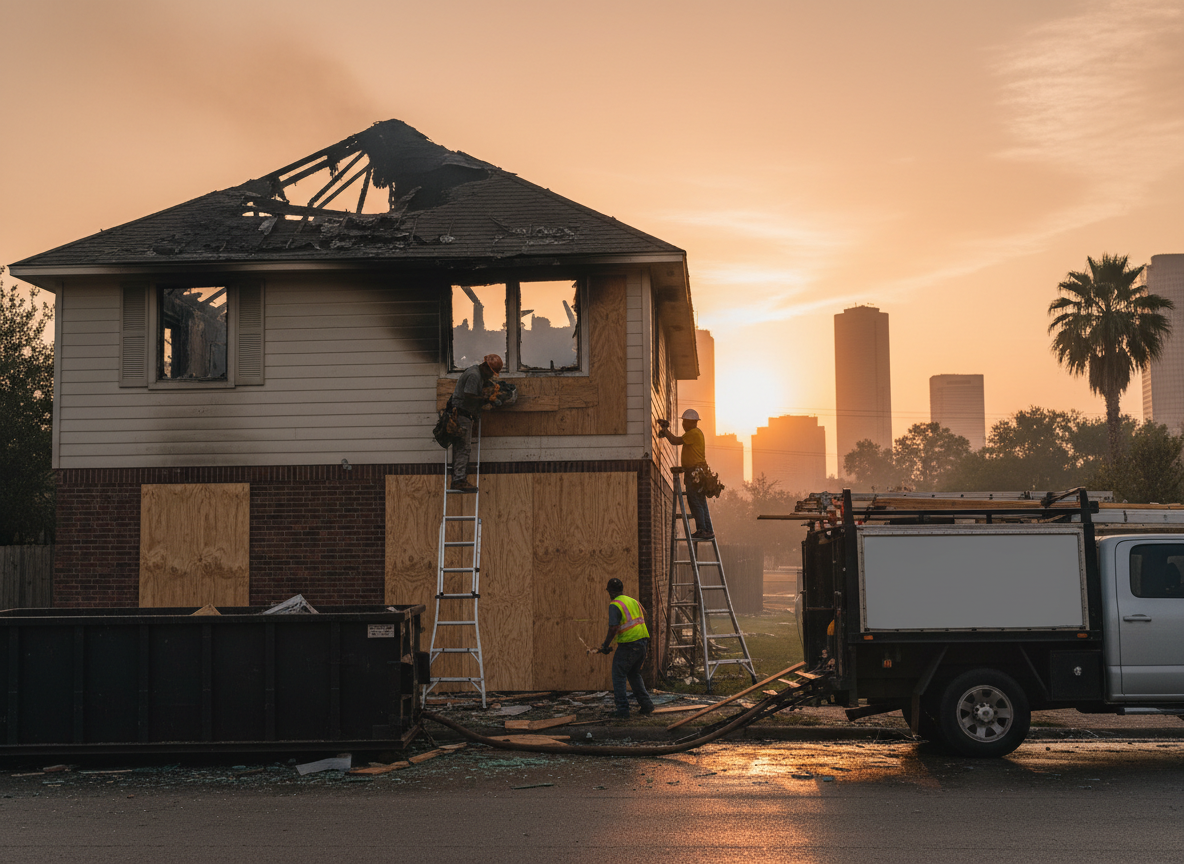
Houston’s subtropical climate brings sudden downpours even in mild winters, so any opening left by fire immediately lets moisture into older wood-frame homes common in the Heights and Midtown. We install plywood over windows, doors and roof sections using exterior-grade material that resists warping in high humidity, then seal seams with flashing tape to keep water out until permanent repairs begin. In neighborhoods like Montrose and River Oaks, narrow lots and mature trees often limit equipment access, so crews work from ladders and scaffolding rather than lifts.
After a fire, Houston Fire Department crews leave standing water from suppression efforts that can migrate into wall cavities if the structure is not closed quickly. Our board-up process includes covering HVAC openings and roof penetrations to prevent humid air from driving moisture deeper into plaster and lath common in pre-1960 homes. We also secure detached garages and carriage houses that sit close to property lines, where wind-driven rain from the Gulf can reach walls that face open lots.
Downtown high-rises and Midtown lofts present different challenges because of shared walls and limited staging areas. We coordinate with building management to install interior barriers that keep smoke odor and construction dust from migrating into occupied units while still allowing ventilation to reduce trapped moisture. This approach keeps secondary water damage from affecting neighboring condos during the weeks between fire and full restoration.
Pearland and Sugar Land customers often face longer response windows because of traffic on 288 and 59, so we stage materials in Katy as well to reach those areas within the same day. Every board-up includes a final walk-through with the property owner or adjuster to confirm all openings are covered and tagged for later removal.
Technician insight
In Houston the thing that catches most people out with Emergency Board Up Post Fire is how quickly humidity re-wets suppression water left inside walls of 1920s–1950s Heights and Montrose homes once the roof or windows stay open overnight.
Heights Bungalow After Kitchen Fire
Fire crews left standing water in the kitchen and attic of a 1940s bungalow near 19th Street. We found water already migrating into plaster walls because the roof vent was open. We installed plywood over windows, tarped the roof section, and sealed HVAC openings the same afternoon, stopping further moisture movement until the adjuster arrived.
Emergency Board Up Post Fire Services We Offer
✓Plywood Window and Door Securing
Install exterior-grade plywood over broken windows and doors in Houston homes to block rain while allowing later removal without damaging original trim.
✓Roof and Skylight Tarping
Apply reinforced tarps over fire-damaged roofs in the Heights and Montrose to prevent water entry until permanent roofing repairs are scheduled.
✓HVAC and Vent Sealing
Cover and seal rooftop units and wall vents to stop humid Houston air from pushing moisture into ductwork after fire suppression.
✓Interior Moisture Barrier Installation
Place temporary plastic and plywood barriers inside multi-unit buildings in Midtown and Downtown to contain water and odor during board-up.
✓Detached Garage and Outbuilding Board Up
Secure separate garages and carriage houses common on older River Oaks lots so wind-driven rain does not reach stored contents.
Emergency Board Up Post Fire Cost in Houston, TX
| Service | Typical Range | What Affects It |
|---|---|---|
| Single-story home board up | $650–$1,200 | Depends on number of windows, doors and roof sections |
| Two-story or complex roof tarping | $900–$1,800 | Scaffolding or lift access adds cost in older Heights homes |
| Multi-unit interior barriers | $400–$750 | Required in Midtown and Downtown shared-wall buildings |
| Detached garage or carriage house | $350–$650 | Common on River Oaks and Montrose lots |
Ranges are typical for Houston, TX and confirmed with an exact written quote before any work starts.
How it works
- 1
Site Assessment
Walk the property in Houston to identify every opening created by fire and note access constraints typical of narrow Montrose lots.
- 2
Material Staging
Deliver plywood, tarps and fasteners from local stock staged in Katy to reach Harris County addresses the same day.
- 3
Secure Openings
Install and seal all plywood and tarps, paying special attention to roof edges and HVAC penetrations that collect standing water.
- 4
Final Walk-Through
Confirm every opening is covered and provide the owner a marked diagram for later removal coordination.
Pricing
Pricing varies with property size, number of openings, roof access and whether interior barriers are required.