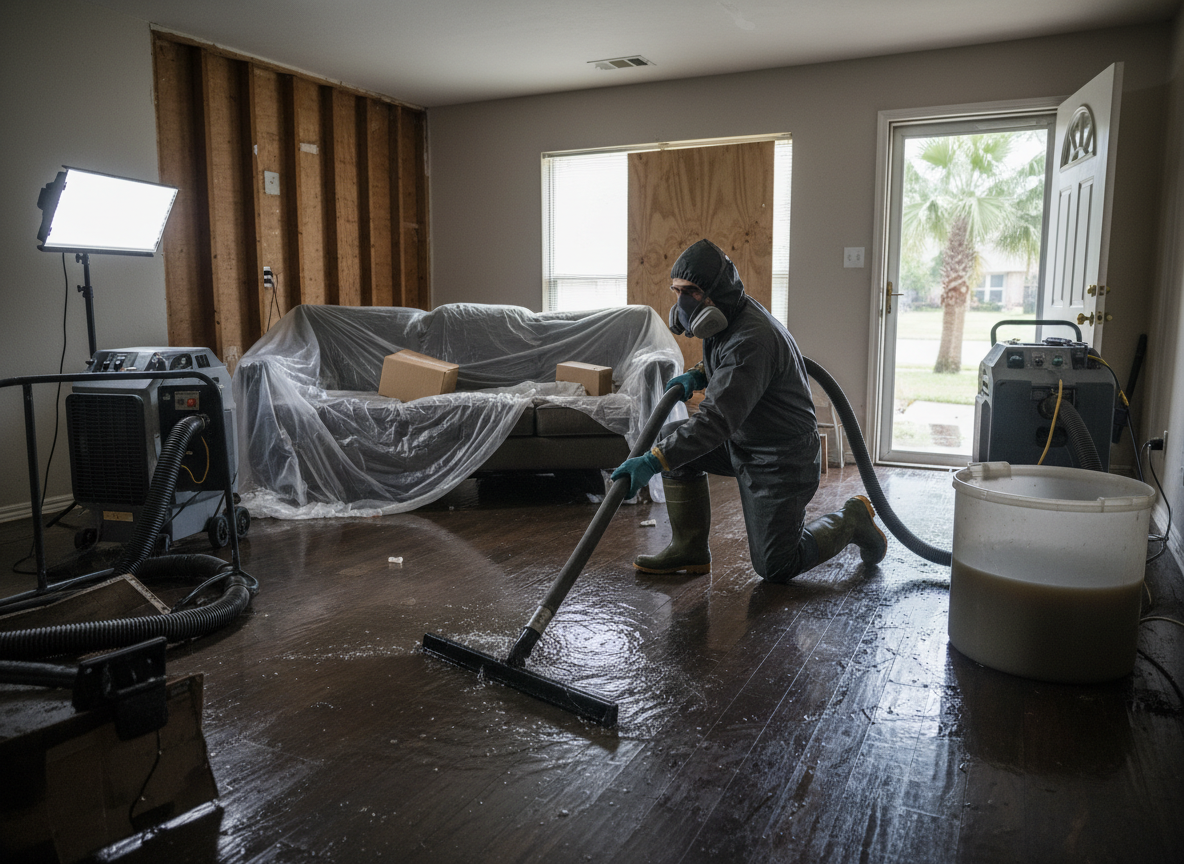
Water damage restoration in Memorial City focuses on single-family homes built mostly in the 1960s through 1980s along streets like Barryknoll and Frostwood. Many sit on concrete slabs that channel water from heavy rains straight into walls and flooring. Crews often extract standing water first from garages and utility rooms before addressing hidden moisture behind drywall near the Katy Freeway corridor.
The subtropical humidity here speeds mold growth within 48 hours after leaks from aging galvanized pipes or roof penetrations. Teams use moisture meters on brick veneer and stucco exteriors common in the neighborhood, then place drying equipment in tight floor plans that limit airflow. Quick access via Gessner Road and the I-10 frontage roads lets trucks reach properties between Memorial City Mall and CityCentre without long detours.
Local drainage patterns around Terry Hershey Park and nearby bayou tributaries mean properties on lower lots see repeated intrusion during summer storms. Restoration work here includes removing saturated insulation under raised floors in a few 1970s ranch homes and drying subfloors before reinstalling finishes.
Around Memorial City
We regularly work near:
- 📍Memorial City Mall
- 📍Memorial Hermann Memorial City Medical Center
- 📍CityCentre
- 📍Terry Hershey Park
- 📍Briarwood Park
- 📍Memorial Drive
Water Damage Restoration in Memorial City — Local Notes
- •Many Memorial City homes from the 1960s-70s have original cast-iron drains that crack and leak under slabs, requiring targeted slab edge access rather than full demolition.
- •Proximity to I-10 and heavy commercial traffic around the mall creates vibration that can worsen small foundation cracks after flooding, so crews check for movement before sealing.
- •Summer humidity combined with mild winters keeps indoor moisture high year-round, so dehumidifiers run longer in enclosed spaces like walk-in closets common in local floor plans.
- •Lots near Gessner and Barryknoll often have narrow side yards that limit equipment placement, forcing smaller portable units and longer drying cycles.