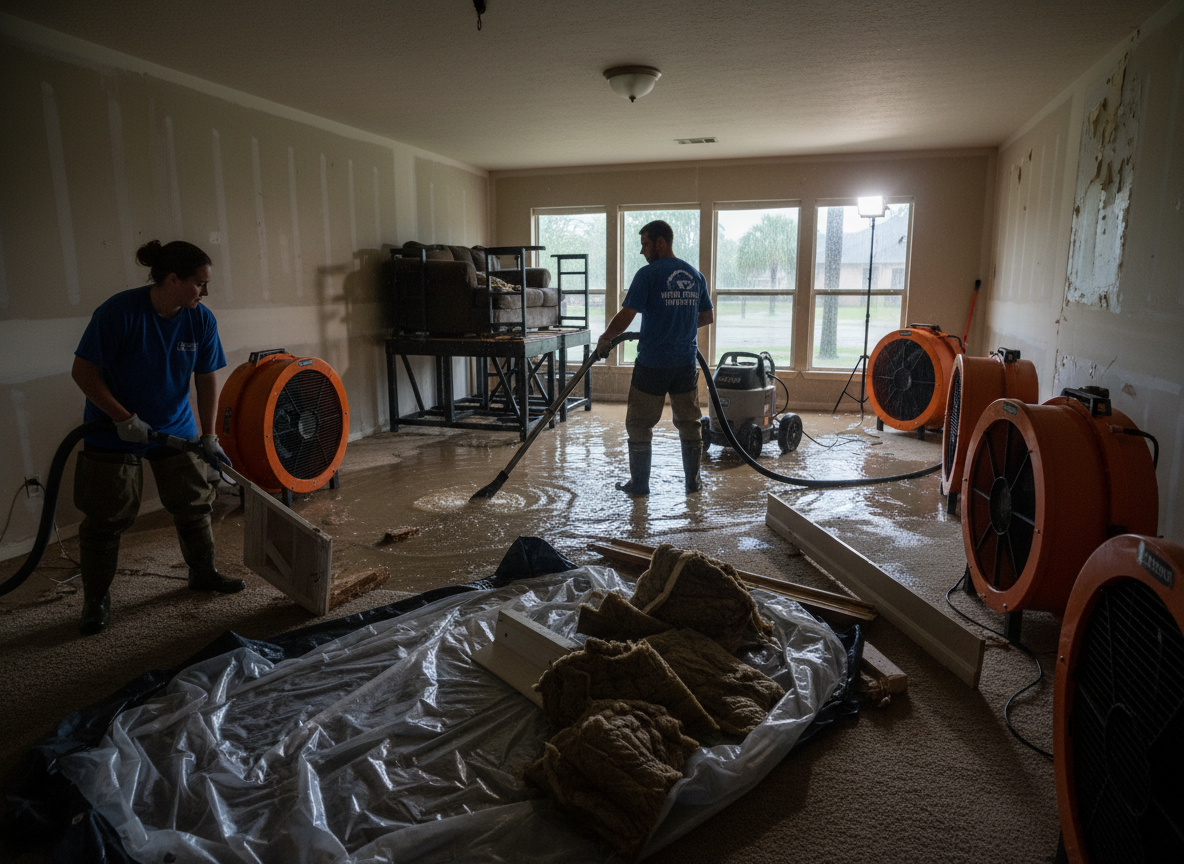
Houston's flat terrain and clay-heavy soils in Harris County slow drainage after heavy rain, leaving water trapped under slab foundations common in Midtown and Downtown homes. Older wood-frame houses in the Heights and Montrose often have plaster walls that hold moisture longer than modern drywall, requiring extended drying times to avoid hidden rot. High summer humidity here routinely pushes indoor moisture levels back up overnight if dehumidifiers are not sized for the local conditions.
Flood water in this area frequently carries silt from nearby bayous and can reach electrical outlets in finished basements or first-floor utility rooms before receding. Extraction must start at the lowest points first, then move to carpet pads and subflooring that trap water under oak or pine flooring typical in River Oaks properties. Failure to pull baseboards early lets moisture wick upward into cabinets, especially in kitchens near the Houston Zoo where older plumbing adds another leak risk.
After extraction, we run commercial air movers and dehumidifiers in a closed-loop system because open windows in mild winters still pull humid Gulf air inside. We check for hidden saturation behind tile in bathrooms and under built-in cabinetry, areas that homeowners often miss until odors develop weeks later. In neighborhoods like Sugar Land or Pearland, we also watch for water that has traveled under driveways and re-enters through garage slabs.
Technician insight
In Houston the thing that catches most people out with flood restoration is how quickly clay soil and flat lots let water back under the slab after the rain stops. A homeowner in the Heights will think the floor feels dry, but the moisture meter still reads high two weeks later because the subfloor never got proper airflow.
Heights Bungalow After Spring Rains
Water entered through the back door and garage during overnight rain and pooled under the kitchen and hallway. We found saturation in the original pine subfloor and behind two layers of wallpaper. Extraction and targeted drying over four days kept the plaster walls intact and prevented mold in the wall cavities.
Flood Restoration Services We Offer
✓Emergency Water Extraction
Rapid removal of standing flood water from living spaces and garages before it migrates into wall cavities common in Houston slab homes.
✓Structural Drying
Placement of air movers and dehumidifiers sized for Houston humidity to dry framing, subfloors, and plaster in older Heights and Montrose properties.
✓Subfloor Moisture Mapping
Infrared and probe readings to locate trapped water under hardwood and tile floors typical in River Oaks and Midtown residences.
✓Baseboard and Trim Removal
Careful removal of baseboards to release trapped moisture and allow airflow behind walls without damaging original millwork in historic Houston homes.
✓Post-Flood Odor Treatment
Neutralization of musty smells left by bayou silt and organic debris that settle into carpet padding and HVAC systems after regional flooding.
Flood Restoration Cost in Houston, TX
| Service | Typical Range | What Affects It |
|---|---|---|
| Single-room extraction and drying | $800–$1,600 | Higher when plaster walls or built-in cabinetry are involved |
| Whole-house flood drying | $2,200–$4,500 | Depends on square footage and how many days humidity stays elevated |
| Subfloor drying add-on | $350–$700 | Required when water sits under hardwood in older Heights homes |
Ranges are typical for Houston, TX and confirmed with an exact written quote before any work starts.
How it works
- 1
Initial Assessment
Walk the property to identify water entry points from streets or yards and note which rooms share slab sections in typical Houston construction.
- 2
Water Removal
Extract standing water from lowest areas first, then pull saturated carpet and pad while protecting original flooring in older neighborhoods.
- 3
Drying Setup
Position equipment to create directed airflow and monitor moisture levels daily until readings match pre-loss conditions in the local climate.
- 4
Final Inspection
Check behind baseboards and under cabinets for remaining moisture before returning the home to normal use.
Pricing
Pricing varies with water depth, number of affected rooms, and whether hidden moisture requires wall or cabinet work.