2026-11-05 ·
Repairing Water Damage in Your Home: A Houston Homeowner's Guide
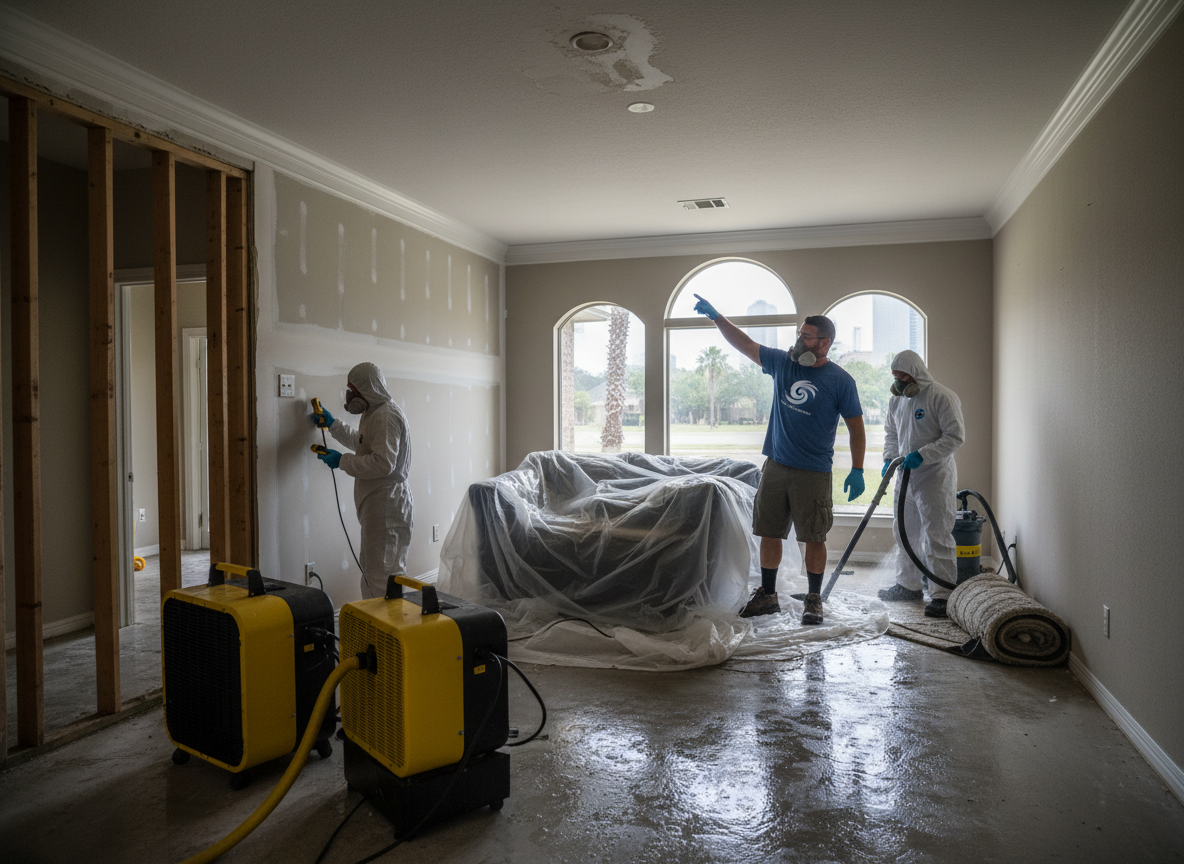
Repairing water damage in a Houston home begins with stopping the source, extracting standing water within the first 24 to 48 hours, and then running professional drying equipment for three to seven days before any material replacement starts. In Harris County the high humidity that lingers after summer storms makes every extra day of moisture costly, especially in neighborhoods where homes were built before 1970.
Initial Assessment in Houston Homes
Walk every room and check behind baseboards and under carpet pads even when only a small leak is visible. Older homes in the Heights and Montrose often have plaster walls that absorb and hold water differently than modern drywall, so moisture meters must be used on multiple layers. In River Oaks and Midtown, slab foundations sit close to the water table, so check for seepage along the perimeter after heavy rain. Document every affected area with photos before any cleanup begins. This record helps when insurance adjusters visit and shows exactly which materials need removal versus drying in place.
Water Extraction and Structural Drying
Once the source is fixed, remove as much water as possible with pumps and wet vacuums before setting up air movers and dehumidifiers. Structural drying and dehumidification equipment runs continuously for several days because Houston’s subtropical summers keep outdoor humidity above 70 percent for weeks at a time. In homes with hardwood floors in Downtown or Midtown, technicians lift sections of flooring to allow airflow underneath. Without this step, trapped moisture leads to cupping that cannot be reversed later. Check moisture readings daily until levels match the unaffected areas of the house.
Mold Risks After Summer Storms
Mold colonies can begin growing on wet drywall or insulation within 48 hours when temperatures stay in the 80s, which is common here from May through October. Homes in the Heights with original lath and plaster require extra attention because cavities behind the plaster trap spores that later migrate into living spaces. After any event that brings several inches of rain in a short period, open walls at least 12 inches above the water line and remove saturated insulation. This prevents hidden growth that shows up months later as musty odors near the Houston Zoo or Museum of Fine Arts area.
Material Repair and Replacement
Once drying is complete, replace damaged drywall, trim, and flooring rather than attempting cosmetic fixes. In Pearland and Sugar Land, many 1990s homes have particleboard cabinets that swell permanently after saturation, so full replacement is the only reliable option. Water damage repair on these properties often includes matching original trim profiles that are no longer stocked at big-box stores. When reinstalling, use moisture-resistant drywall in bathrooms and laundry rooms to reduce future problems. Keep all receipts and before-and-after photos for insurance and for any future sale of the property.
Prevention Steps for Local Conditions
Install a whole-house water shutoff valve and check hoses on washing machines and water heaters every six months. In older neighborhoods like Montrose, galvanized supply lines often corrode from the inside; replacing them during a remodel prevents sudden leaks. After any flood event, review drainage around the foundation and consider French drains if water pools near the house. For readers wanting more detail on costs, see our post on how much it costs to repair flood damage in Houston. Choosing the right team matters; our guide on how to choose a water damage restoration company in Houston covers the questions to ask before work begins.