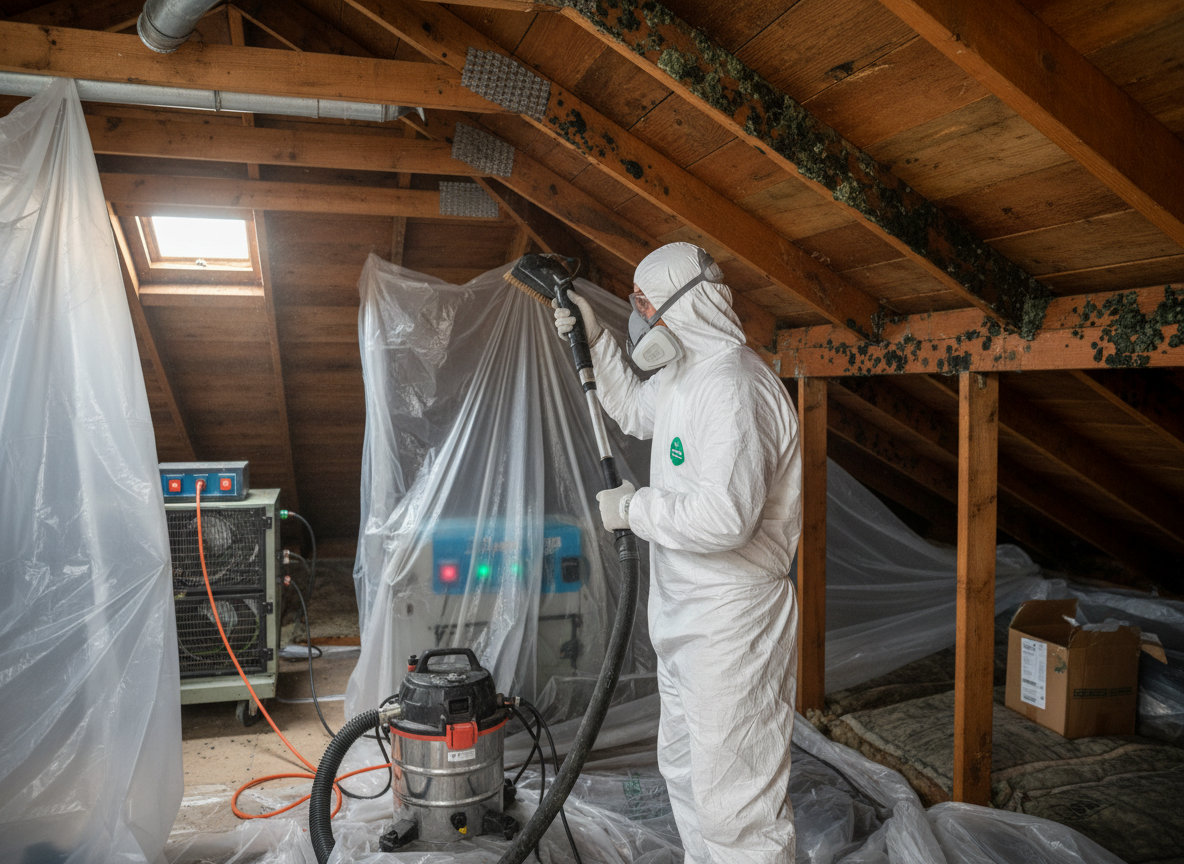
Houston's subtropical climate brings hot humid summers that push moisture into attics through roof decks and soffits, especially in pre-1980 homes common in the Heights and Montrose. Older batt insulation and limited ridge venting trap condensation against rafters, allowing mold to colonize sheathing and framing before homeowners notice musty odors downstairs. Crews start with moisture mapping and negative-air containment to keep spores from drifting into living spaces during removal.
In Harris County neighborhoods like River Oaks and Midtown, many attics sit above plaster ceilings that crack when crews add weight or create access points. Removing affected cellulose or fiberglass requires careful bagging and HEPA vacuuming to avoid cross-contamination, while checking for hidden roof leaks near chimneys or plumbing vents that recur after heavy rain. Mild winters delay drying, so dehumidifiers often run for several days post-removal before new insulation can be installed.
Downtown high-rises and nearby townhomes add another layer: tight attics with low clearance force technicians to work in sections, using antimicrobial rinses rated for porous wood rather than bleach that leaves salts behind. Homeowners in Katy and Sugar Land sometimes see similar issues after AC condensate overflows, but the core problem remains poor ventilation combined with year-round humidity that keeps wood moisture content above 16 percent for months.
Technician insight
In Houston the thing that catches most people out with Attic Mold Removal is how quickly condensation builds in the Heights and Montrose attics during the long shoulder seasons when daytime humidity stays high but nights cool the roof deck; older homes there often have only gable vents that never move enough air, so mold returns within a year if ventilation is not addressed at the same time.
Montrose Bungalow Attic
Homeowner noticed a musty smell after summer rains but no ceiling stains. Inspection found black mold on rafters and saturated insulation above the original plaster. Crews contained the space, removed the wet cellulose, treated the sheathing, and added ridge venting before reinstalling new insulation. Odors disappeared and moisture readings stayed below 10 percent through the next humid season.
Attic Mold Removal Services We Offer
✓Attic Insulation Removal
Extraction of mold-affected cellulose or fiberglass batts that have absorbed moisture from Houston humidity, followed by proper disposal to prevent re-growth.
✓Mold-Contaminated Sheathing Treatment
Surface cleaning and sealing of roof decking and rafters in attics where condensation has allowed mold to embed in older plywood common in Heights homes.
✓Attic Ventilation Assessment
Inspection and upgrade recommendations for soffit and ridge vents that fail to move air in Houston's mild winters, reducing future condensation risk.
✓Hidden Leak Tracing
Camera and moisture-meter checks around plumbing stacks, chimneys, and skylights that often leak unnoticed until mold appears in Montrose and Midtown attics.
✓Post-Removal Antimicrobial Application
Application of EPA-registered treatments on wood surfaces after mold removal to inhibit regrowth in high-humidity conditions without affecting indoor air.
Attic Mold Removal Cost in Houston, TX
| Service | Typical Range | What Affects It |
|---|---|---|
| Small attic inspection and minor removal | $450–$850 | Limited to one access point and surface treatment only |
| Full attic insulation removal | $1,200–$2,400 | Includes bagging, disposal, and basic antimicrobial rinse |
| Sheathing cleaning and sealing | $600–$1,100 | Per 500 sq ft; price rises with height and tight access |
| Ventilation upgrade consultation | Free | Included when removal work is performed |
Ranges are typical for Houston, TX and confirmed with an exact written quote before any work starts.
How it works
- 1
Initial Containment Setup
Technicians seal attic access points and establish negative air pressure to keep spores from migrating into living areas of the home.
- 2
Moisture and Mold Mapping
Detailed inspection with meters and borescopes identifies all affected zones, including hidden areas behind insulation in older Houston attics.
- 3
Removal and Cleaning
Affected materials are removed, surfaces are HEPA-vacuumed and treated, and debris is bagged for disposal outside the structure.
- 4
Drying and Verification
Dehumidifiers and air movers reduce moisture content below 12 percent before final clearance testing confirms the space is dry.
Pricing
Cost depends on attic size, depth of mold into sheathing, and whether insulation replacement is needed.