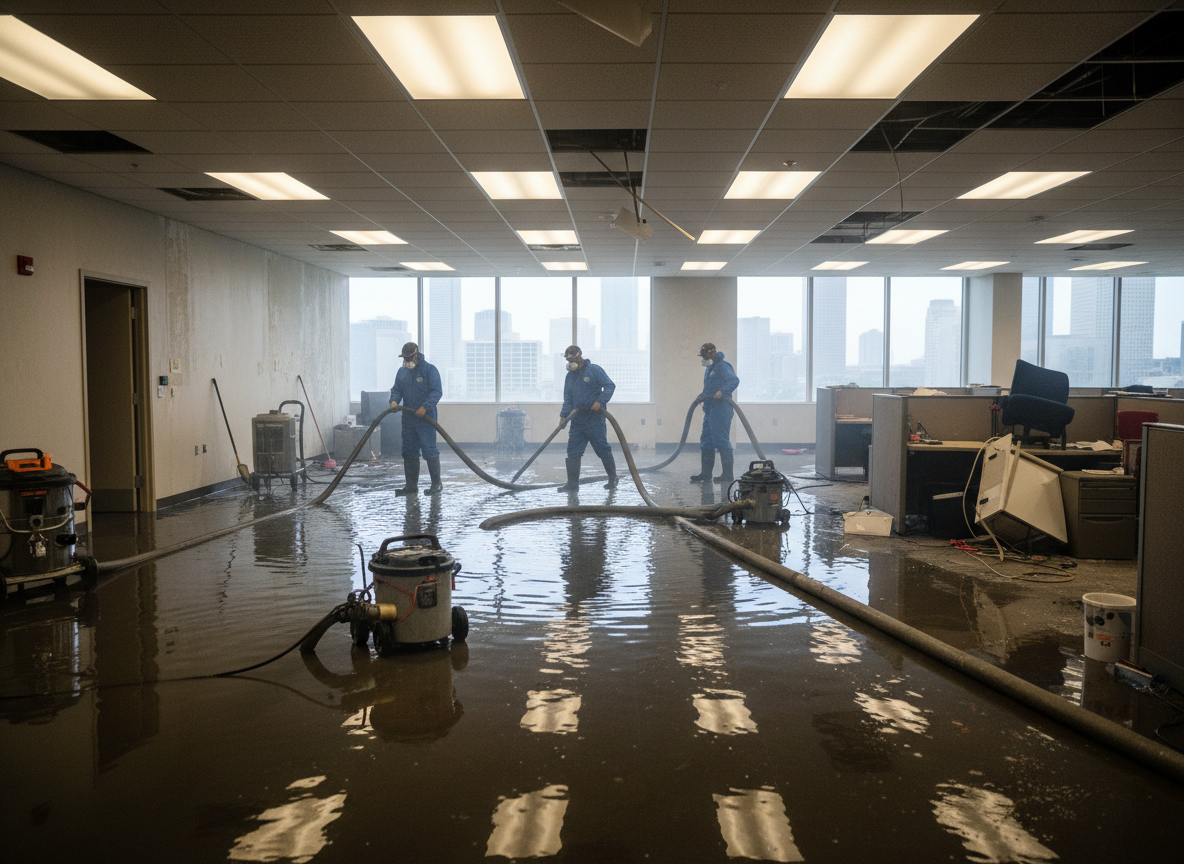
Houston’s subtropical climate brings high humidity that accelerates mold on commercial drywall and carpet within 48 hours after any leak. Older office buildings in Midtown and the Heights often have flat roofs and aging HVAC systems that channel water into ceiling plenums, requiring negative-pressure containment before extraction begins. Crews must also account for the region’s clay-heavy soils that shift foundations and crack underground supply lines feeding retail spaces in River Oaks and Downtown.
In warehouses near Pearland and Sugar Land, standing water on concrete slabs can wick upward into racking systems, damaging inventory and triggering insurance scrutiny over secondary moisture. Technicians use industrial desiccants sized for Houston’s dew points rather than standard residential units, and they isolate electrical panels early because commercial panels sit lower and corrode faster in prolonged humidity. Documentation of every step protects owners when dealing with multi-tenant liability in mixed-use buildings.
Restaurants and hospitality properties near Minute Maid Park face unique risks from grease-laden floor drains that back up during heavy rains; these jobs require degreasers and antimicrobial rinses that meet health-department standards before reopening. Technicians coordinate with property managers to stage work after hours so sales floors stay accessible, and they track moisture in wall cavities behind tile and FRP panels that hide water longer than open drywall.
Coordination with Harris County permitting is sometimes needed when structural members are compromised, especially in buildings constructed before modern flood-elevation rules. Crews leave temporary dehumidification running for days rather than hours because residual moisture in slab subfloors can reappear weeks later during another humid spell.
Technician insight
In Houston the thing that catches most people out with Commercial Water Damage Repair is how quickly mold takes hold once humidity spikes after a leak; clay soils around the Heights and Montrose shift foundations enough to reopen pipe joints weeks later if you don’t keep monitoring slab moisture for at least ten days.
Midtown Office Suite After Roof Drain Failure
Water migrated through a suspended ceiling into server rooms and carpeted corridors. Crews isolated power, extracted standing water, and ran desiccants for six days until slab readings dropped below commercial thresholds. Tenants returned without data loss and the property manager received full moisture logs for the insurer.
Commercial Water Damage Repair Services We Offer
✓Office Building Water Extraction
Rapid removal of standing water from multi-story offices in Downtown and Midtown using truck-mounted pumps sized for commercial volumes.
✓Retail Space Flood Recovery
Floor and wall drying plus inventory protection for stores in River Oaks and the Heights where display cases trap hidden moisture.
✓Restaurant Kitchen Leak Repair
Degreasing and antimicrobial treatment of floor drains and tile in commercial kitchens to satisfy health inspections after backups.
✓Warehouse Moisture Control
Desiccant drying and racking inspection for distribution centers near Katy and Pearland to prevent mold on stored goods.
✓Museum and Cultural Facility Drying
Low-humidity protocols for spaces near the Houston Zoo and Museum of Fine Arts to protect artifacts and exhibit cases.
Commercial Water Damage Repair Cost in Houston, TX
| Service | Typical Range | What Affects It |
|---|---|---|
| Initial commercial extraction | $1,800–$4,500 | Depends on volume and access in high-rises versus single-level retail |
| Multi-day desiccant drying | $900–$2,200 per day | Longer runs common in Houston summers due to humidity |
| Restaurant kitchen sanitation | $1,200–$2,800 | Includes degreasing and health-department documentation |
| Warehouse racking inspection | $650–$1,400 | Added when inventory must be moved and checked |
Ranges are typical for Houston, TX and confirmed with an exact written quote before any work starts.
How it works
- 1
Site Assessment
Technicians map water migration through commercial slabs and wall cavities using moisture meters calibrated for Houston’s humidity.
- 2
Water Removal
Industrial extraction equipment pulls standing water while isolating electrical and HVAC systems to prevent corrosion.
- 3
Containment And Drying
Negative air machines and desiccants run until readings meet commercial standards, often for several days in summer.
- 4
Sanitation And Documentation
Antimicrobial application and photo logs support insurance claims for multi-tenant properties across Harris County.
Pricing
Pricing varies by square footage affected, duration of drying, and whether slab or multi-story work is required.