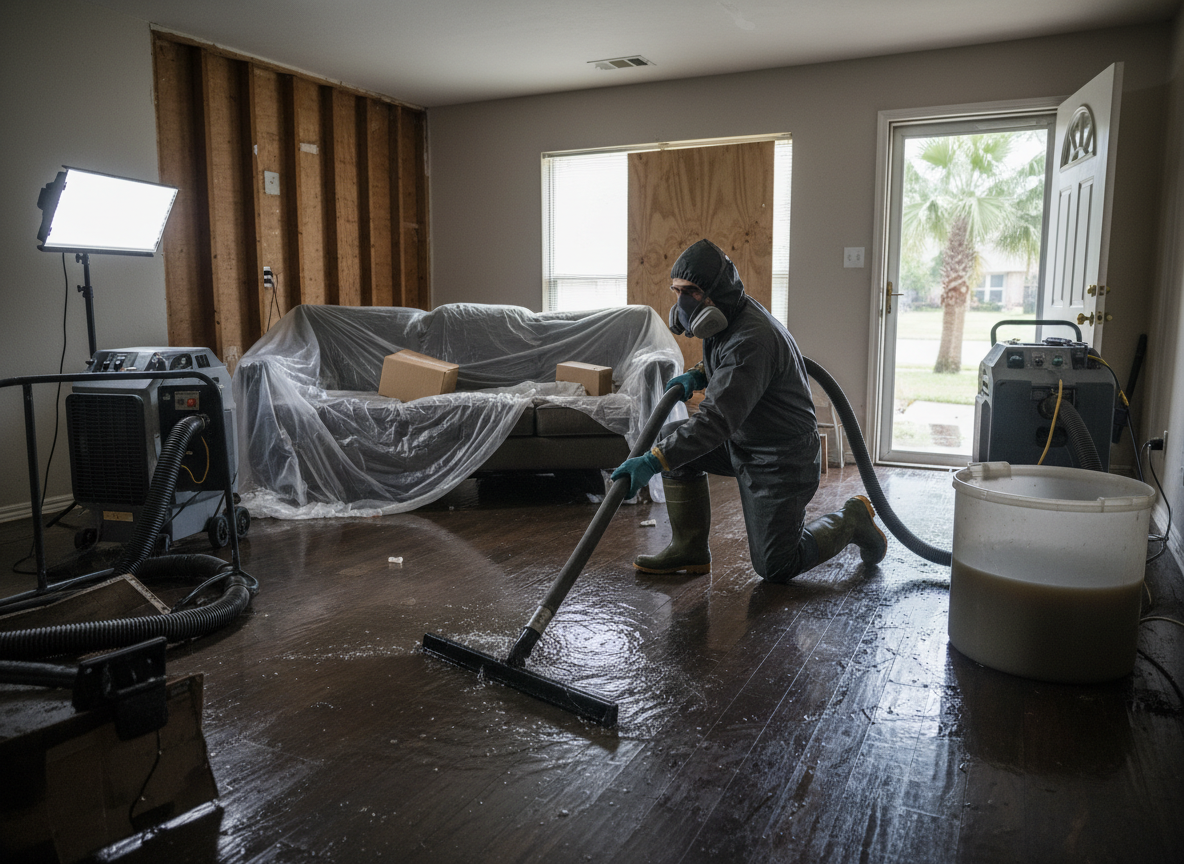
Houston's subtropical climate brings high humidity year-round that keeps moisture trapped in wall cavities and under flooring long after visible water recedes. Homes in the Heights and Midtown often feature older plaster and lath construction that absorbs water differently than newer drywall, requiring slower, monitored drying to avoid cracking or hidden mold growth. Technicians must account for the region's frequent afternoon thunderstorms and poor drainage in low-lying blocks near Buffalo Bayou.
River Oaks and Montrose properties sit on clay-heavy soils that expand and contract with moisture changes, shifting foundations and creating new entry points for water during heavy rains. Remediation here frequently involves removing baseboards and checking behind built-in cabinetry where leaks travel unseen. Without proper containment, spores can spread through the HVAC systems common in these older estates, turning a localized issue into a whole-house problem.
In Harris County neighborhoods close to Downtown, slab-on-grade construction means water that enters from the exterior often pools beneath the concrete, demanding moisture meters and thermal imaging rather than surface checks alone. Nearby cities like Katy and Sugar Land share similar bayou flooding patterns that push water into attached garages and utility rooms, where electrical and plumbing runs complicate extraction.
Pearland homes built on fill dirt can experience rising damp after prolonged wet periods, especially in crawl spaces that many residents overlook until odors appear. Remediation crews here focus on ventilating and treating subfloor areas before reinstalling finishes to prevent repeat callbacks during the next mild winter rain event.
Technician insight
In Houston the thing that catches most people out with water remediation is how the constant humidity keeps subfloor and wall moisture levels elevated for weeks after the initial leak, especially in Heights homes with original wood framing where clay soil movement creates slow leaks that go unnoticed until odors develop.
Montrose Home After Heavy Rain
Water entered through a shifted foundation joint during a summer storm and wicked into plaster walls. Scans revealed elevated moisture extending three feet up behind built-in shelving. Crews contained the space, extracted water from the slab edge, and ran drying equipment for six days until readings stabilized. The homeowner avoided mold growth and full wall replacement.
Water Remediation Services We Offer
✓Hidden Moisture Detection
Thermal imaging and moisture meter scans locate water trapped behind walls and under slabs common in Houston's older Heights and Montrose homes.
✓Structural Drying After Flooding
Industrial air movers and dehumidifiers address prolonged humidity effects on plaster, drywall, and wood framing in River Oaks and Midtown properties.
✓Crawl Space Water Extraction
Removes standing water and treats vapor barriers in Pearland and Katy homes where clay soils and poor drainage allow repeated moisture intrusion.
✓HVAC Moisture Remediation
Cleans and dries ductwork and coils after water events to stop mold spread through central systems prevalent in Harris County residences.
✓Slab Leak Containment
Contains and dries water from plumbing leaks under concrete foundations typical in Downtown and Sugar Land neighborhoods.
Water Remediation Cost in Houston, TX
| Service | Typical Range | What Affects It |
|---|---|---|
| Hidden moisture scan and report | $175–$350 | Depends on square footage and number of rooms checked in older Heights or Montrose homes. |
| Crawl space extraction and drying | $800–$1,800 | Varies with water depth and whether vapor barrier replacement is needed after Katy or Pearland flooding. |
| Whole-room structural drying | $1,200–$2,600 | Influenced by humidity levels and wall materials in River Oaks or Midtown properties. |
| HVAC moisture remediation | $450–$950 | Covers duct cleaning and coil treatment after water events in slab homes. |
Ranges are typical for Houston, TX and confirmed with an exact written quote before any work starts.
How it works
- 1
Initial Assessment
Inspect affected areas in the specific Houston neighborhood using meters and imaging to map moisture extent without disturbing finishes.
- 2
Containment Setup
Isolate the work zone with plastic barriers to prevent spore migration through humid Houston air and HVAC systems.
- 3
Water Removal
Extract standing water from floors, crawl spaces, or slabs using pumps suited to local clay soil conditions.
- 4
Drying and Monitoring
Run equipment for several days while tracking moisture levels that humidity in Harris County can prolong.
- 5
Final Clearance
Verify dryness and safe conditions before allowing reentry or finish work.
Pricing
Upfront quotes after on-site inspection reflect home age, water volume, and access challenges in each Houston neighborhood.